
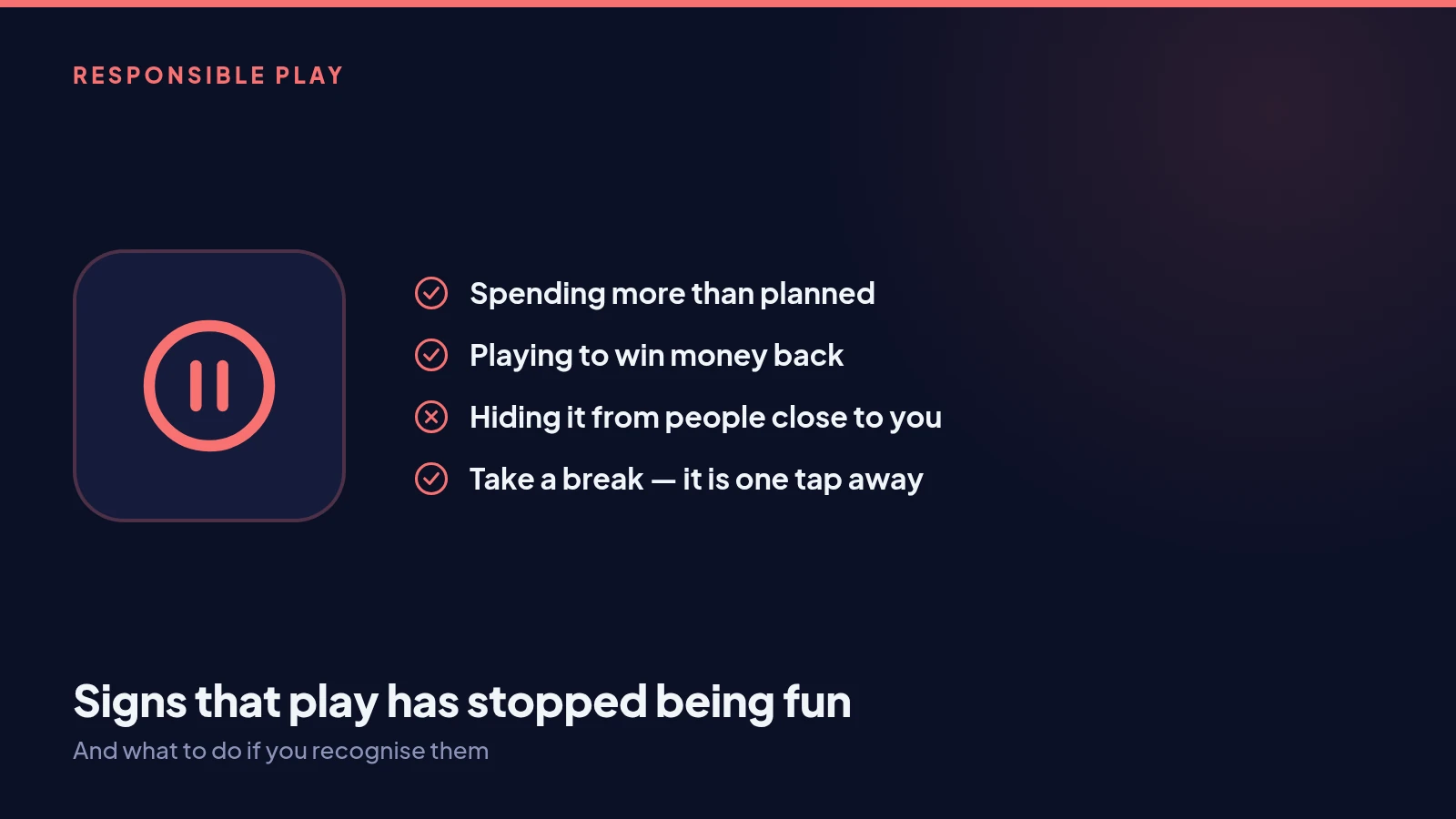
Signs that play has stopped being fun
Most people play for the small thrill of a number on the board. For some it quietly becomes something else. The signs to look for, and what to do if you recognise them.
18 September 2026
The journal
Straight answers about the draw, the odds and your money — from the people who built it. No tips, no systems, no lucky numbers.
Most people play for the small thrill of a number on the board. For some it quietly becomes something else. The signs to look for, and what to do if you recognise them.
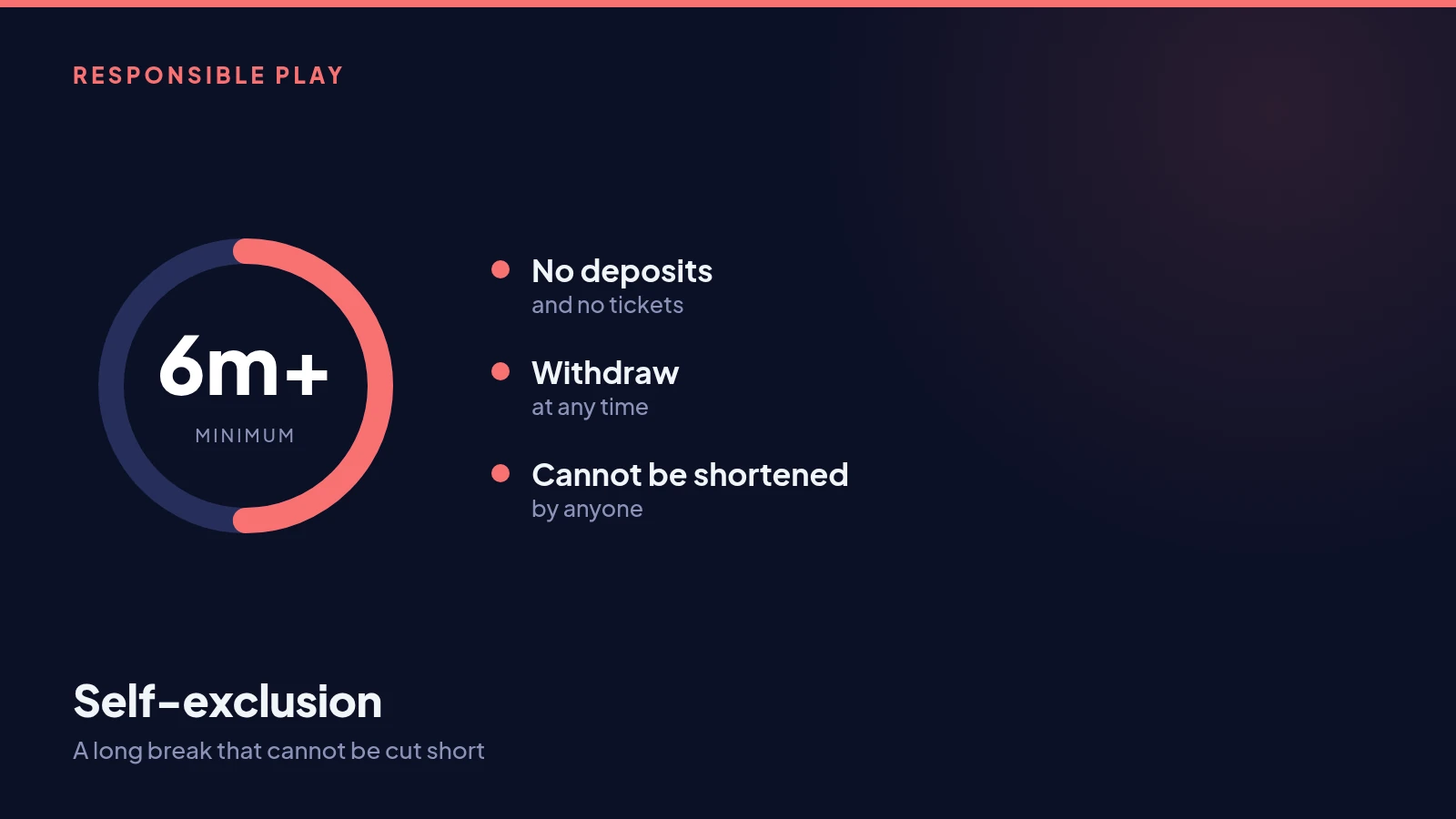
When a short pause is not enough, self-exclusion closes your account to play for six months or more. How it works, what it does and does not stop, and why it cannot be undone early.
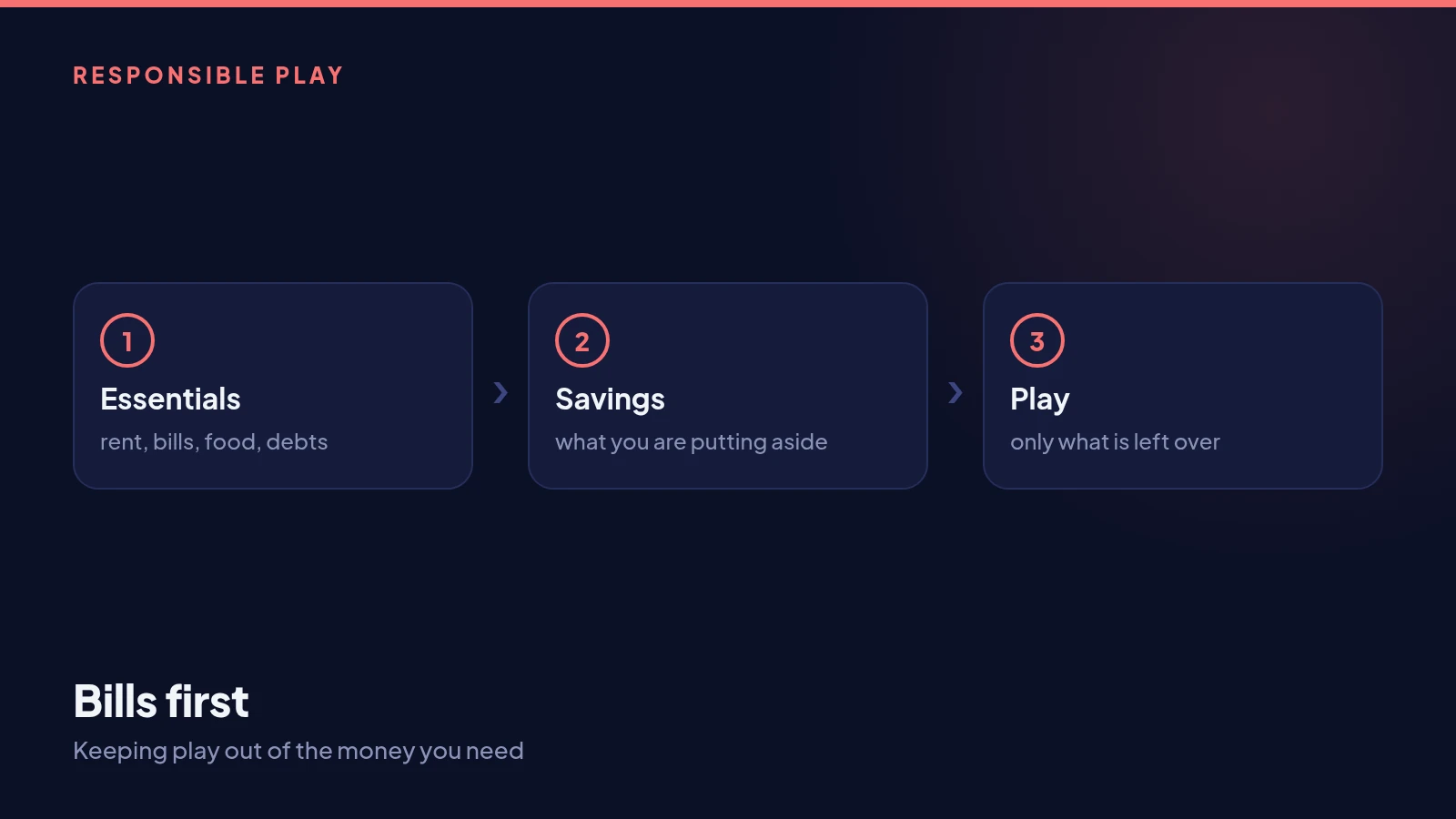
The simplest rule of responsible play is also the most important: only play with money left over after everything that has to be paid. How to set that up so it holds.
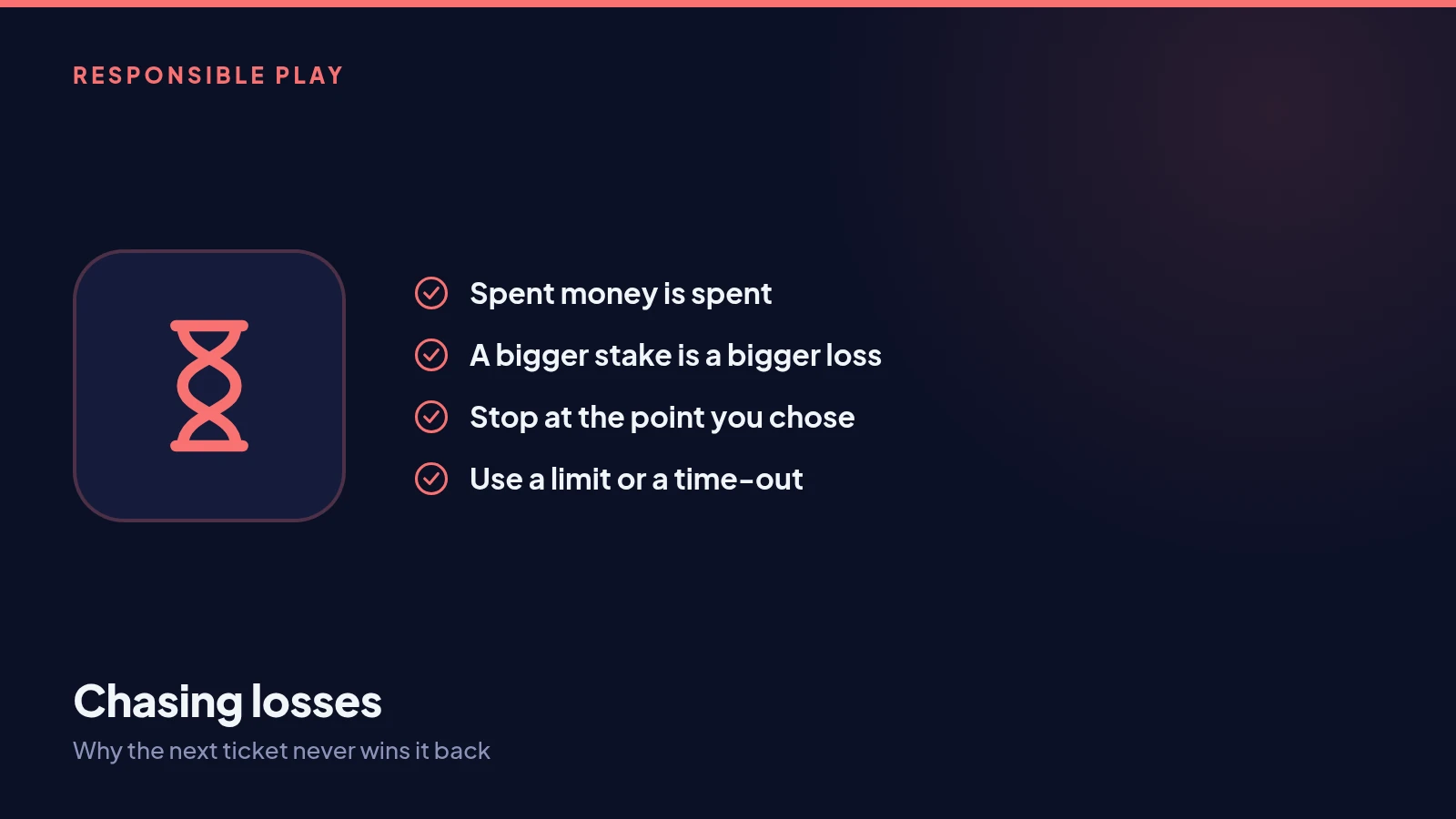
Raising your stake to recover what you have lost feels like fixing a problem. It usually doubles it. How chasing starts, why it does not work, and what to do instead.
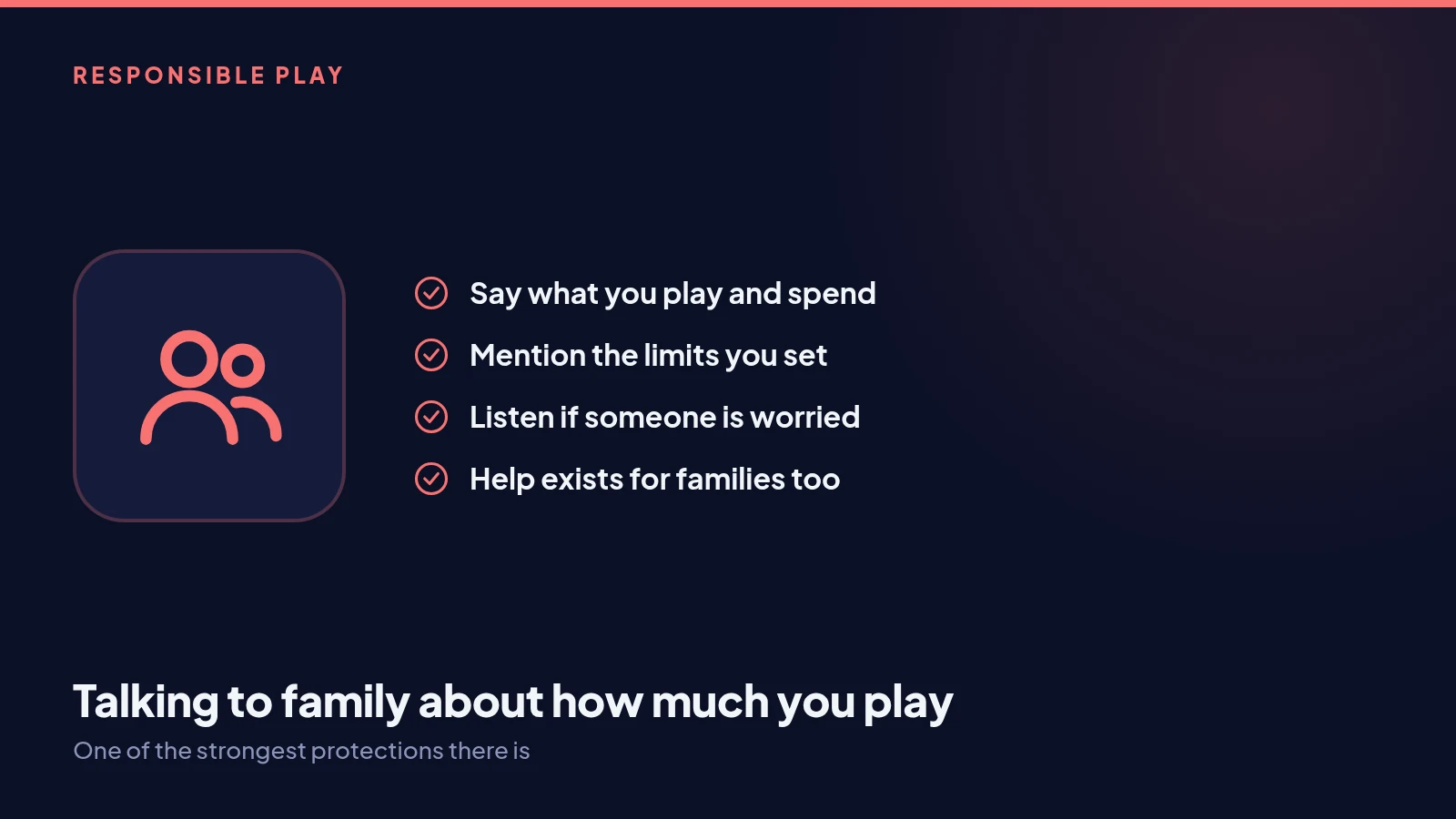
Being open with the people close to you is one of the strongest protections there is. How to start the conversation, and how to respond if someone raises it with you.
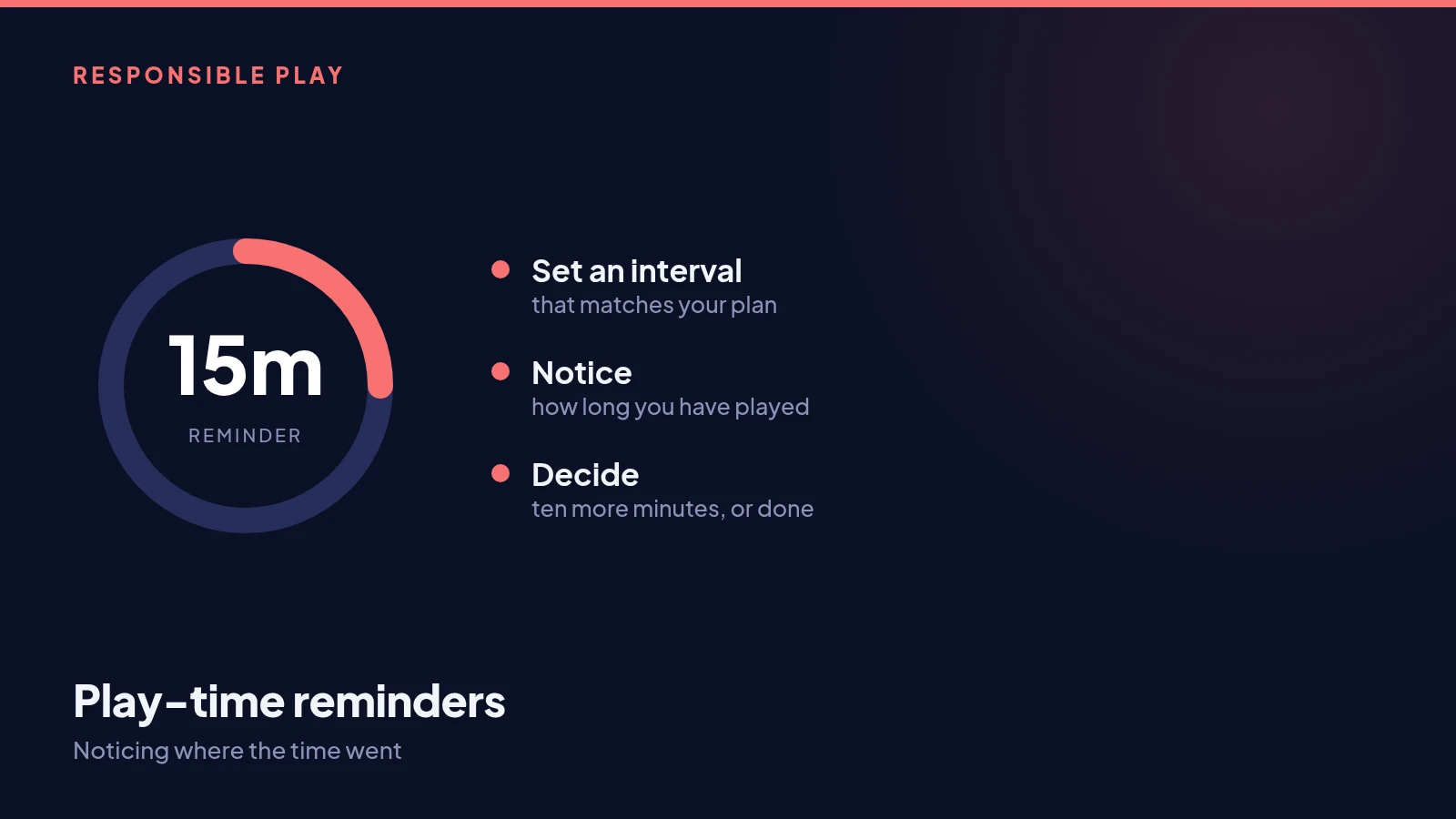
Time passes differently when you are watching numbers. A reminder of how long you have been playing is a small tool that does a surprising amount of good.
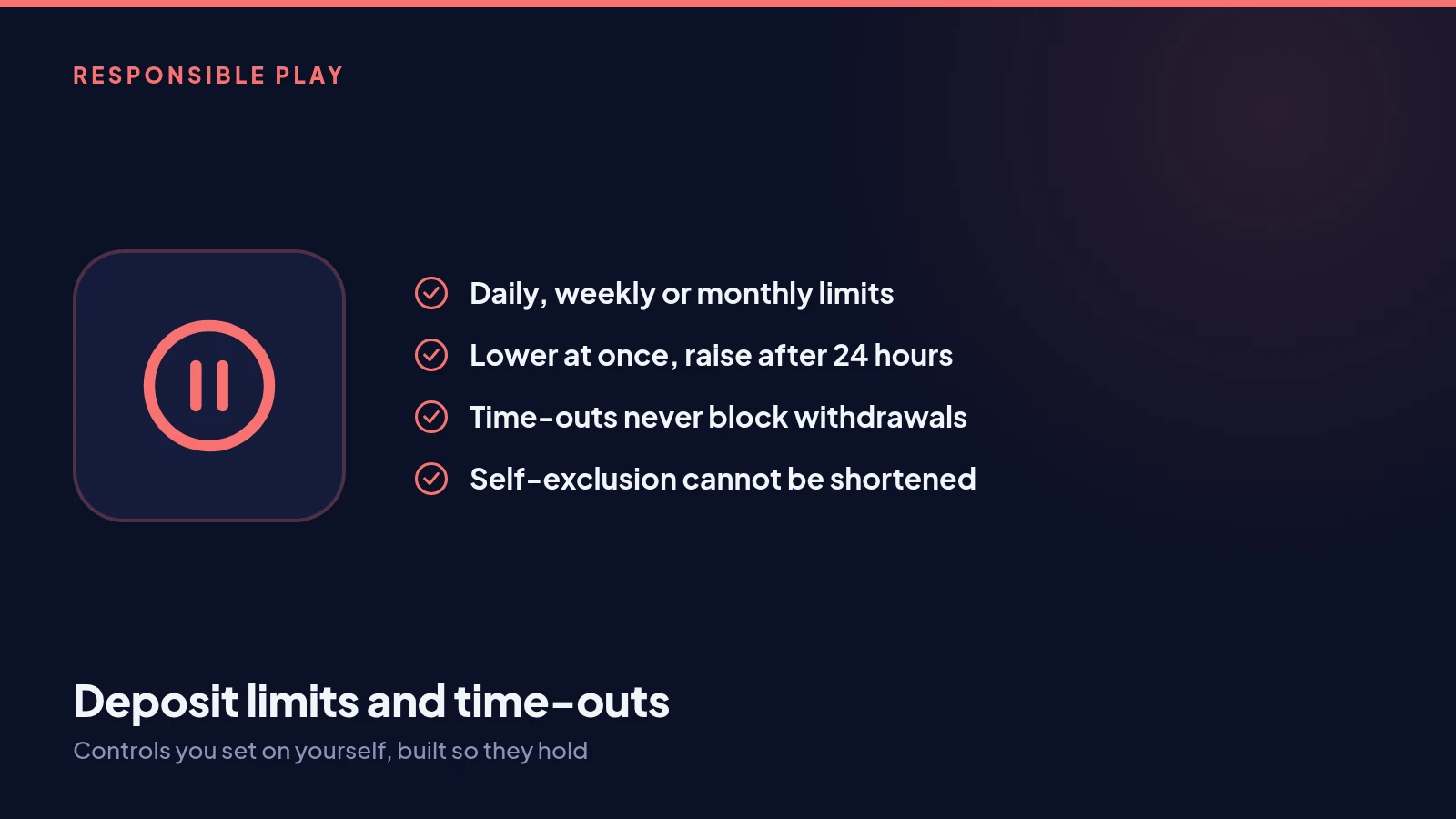
Your account has controls you can set on yourself: deposit limits, a play reminder, a short time-out and a long self-exclusion. What each one does, and the rules that make them hold.
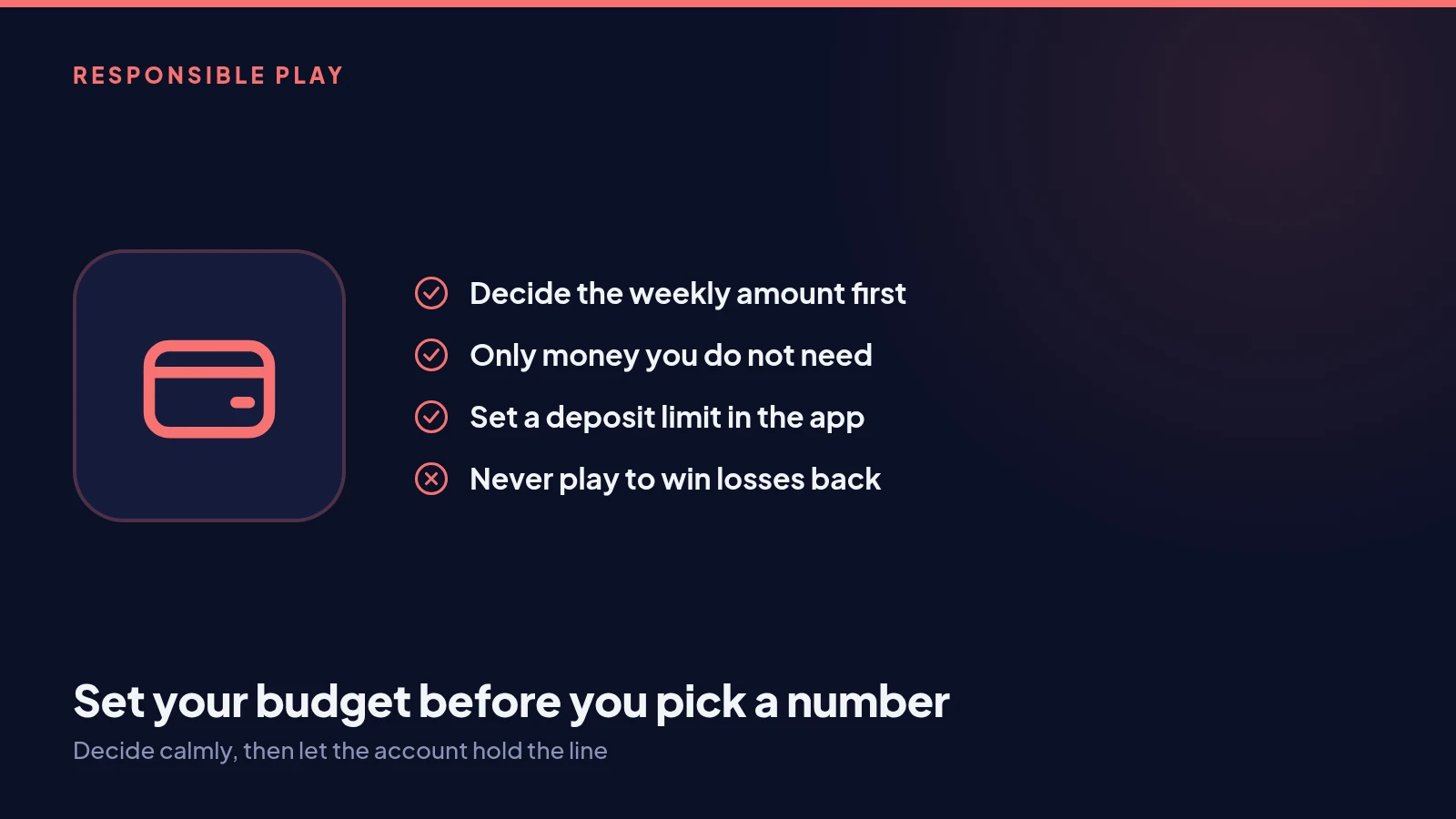
The best time to decide how much to spend is before the first ticket, not after the fifth. A simple way to set a budget that holds, and the tools that hold it for you.